Cross-border e-commerce is becoming the biggest growth driver for Southeast Asia’s SMEs.
According to Cross-Border Magazine, the Asia-Pacific region has become the global epicenter of e-commerce logistics growth, with the sector expected to reach USD 269 billion in 2026. This growth is fueled by rising digital consumption, stronger logistics infrastructure, and increasing cross-border online shopping behavior across the region.
At the same time, markets such as Indonesia, Vietnam, and Thailand are experiencing explosive digital commerce growth. More consumers are comfortable purchasing products from neighboring ASEAN countries, creating new opportunities for SMEs that previously only focused on their domestic market.

Many SMEs are missing the shipping cost complexity before expanding. Once SMEs start selling across borders, they must not forget that parcel shipping costs, customs coordination, last-mile delivery, and logistics infrastructure directly affect profitability and customer experience.
Understanding ASEAN Shipping Costs and Regional Differences
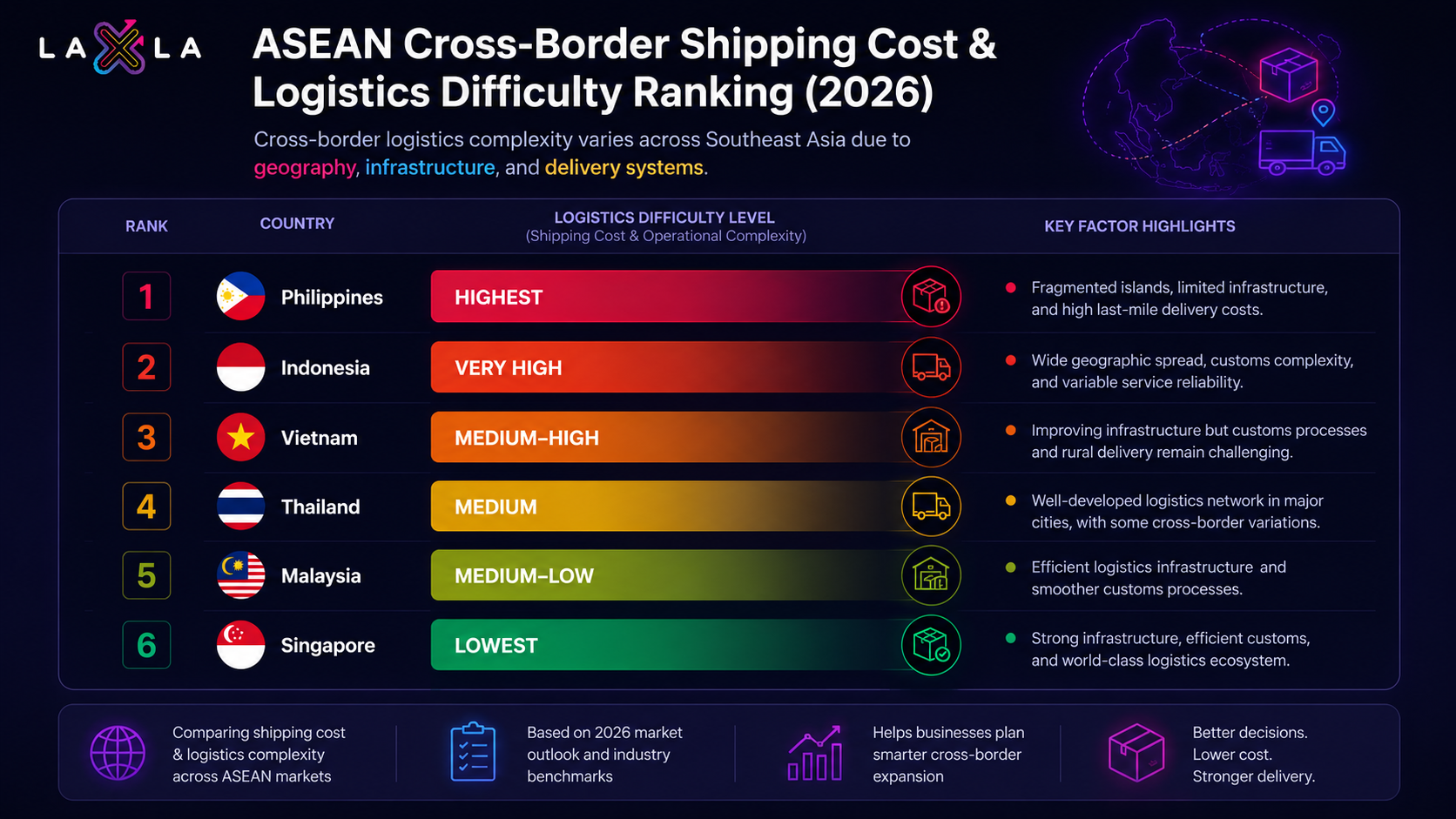
The shipping costs across ASEAN are based on many factors: geography, infrastructure quality, customs efficiency, and delivery networks, as well as the expense and difficulty of cross-border e-commerce.
As for now, the Philippines ranks the highest shipping difficulty market in ASEAN. The country’s archipelago geography, with more than 7,000 islands, creates fragmented delivery routes and expensive last-mile logistics. This directly impacts delivery speed and fulfillment costs. Indonesia follows closely due to its 17,000 islands and uneven logistics infrastructure across regions.
Vietnam falls into the medium-high category. The country’s e-commerce growth is accelerating rapidly, but logistics consistency still varies across different areas. Thailand ranks at a medium level due to relatively strong transport systems and ASEAN connectivity, while Malaysia remains one of the more efficient logistics markets because of strong highways and port infrastructure. Singapore ranks as the lowest shipping difficulty market in ASEAN due to its centralized city-state structure, highly efficient customs systems, and world-class logistics network.
What makes this even more interesting is how infrastructure investment is reshaping future shipping costs. Vietnam, for example, is advancing the Lao Cai-Hanoi-Haiphong railway project supported by China, with an estimated value of USD 8.4 billion. This project is expected to improve logistics efficiency and strengthen regional trade routes by 2030. Meanwhile, Cambodia’s Funan Techo Canal project aims to improve direct shipping access and reduce dependency on neighboring ports. These developments show that ASEAN logistics is evolving quickly, and SMEs that understand these changes early will gain a competitive advantage.

Why Integrated Systems Matter and How Laxla Helps
Cross-border expansion can be a burden because SMEs need to manage warehouses, couriers, customs, and delivery through multiple vendors. As orders grow across ASEAN countries, operations become harder to control, shipping costs increase, and customer experience starts to suffer. This often stops businesses from scaling confidently into new markets.
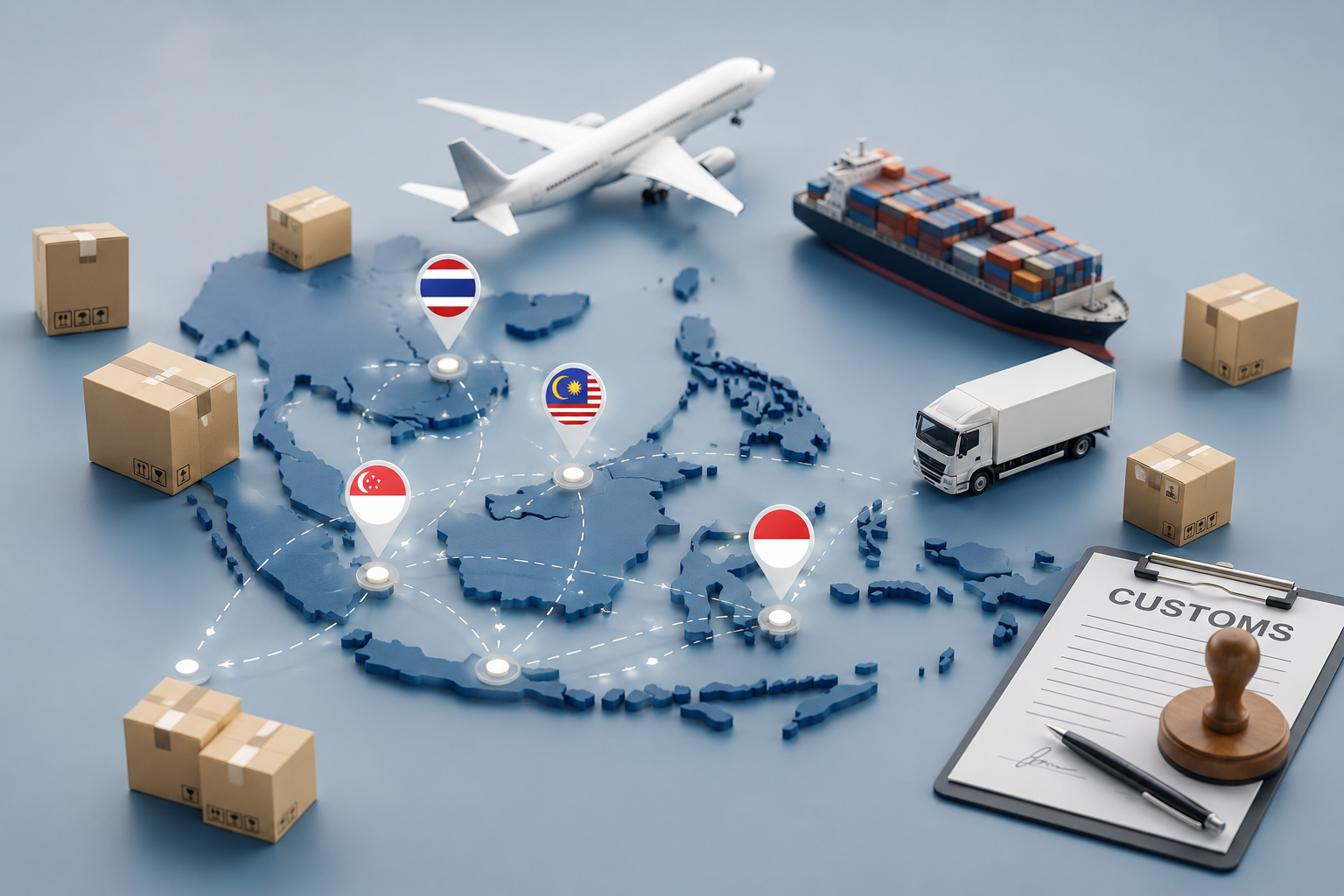
Laxla helps simplify cross-border expansion through a coordinated ecosystem that supports sellers across Singapore, Malaysia, Indonesia, and Thailand, even without having a physical warehouse in each country. We also help improve SMEs’ product packaging, optimizing their e-commerce (Shopee and Lazada) listings, and strengthening their brand positioning across ASEAN markets. So, businesses can focus on growing sales and building stronger connections rather than focusing on complicated backend operations.
Closing
More consumers from ASEAN are now comfortable buying products across borders. With improving logistics infrastructure and rising digital demand, Singapore SMEs and SMEs in ASEAN have more opportunities than ever to expand their business.
However, SMEs need proper coordination to avoid any trouble. At Laxla, we help SMEs simplify cross-border growth with a more coordinated system across Singapore, Malaysia, Indonesia, and Thailand. We help businesses expand more efficiently without the heavy operational burden of managing everything alone.